

Sude Kuzgun

      📈 1. Psychological Trajectory: From Opportunistic Extraction to Malicious Defamation
Phase 1: Financial Enticement and Currency Manipulation (Figures 1–4)
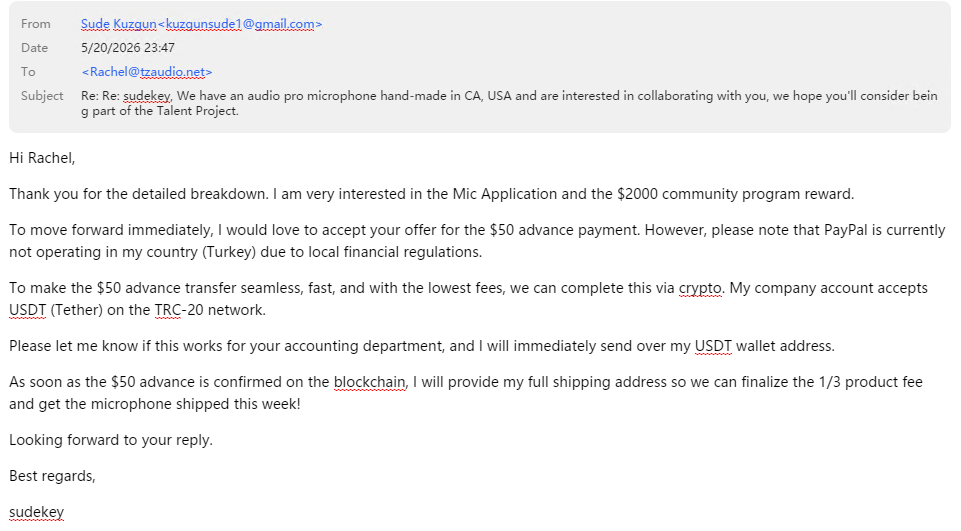
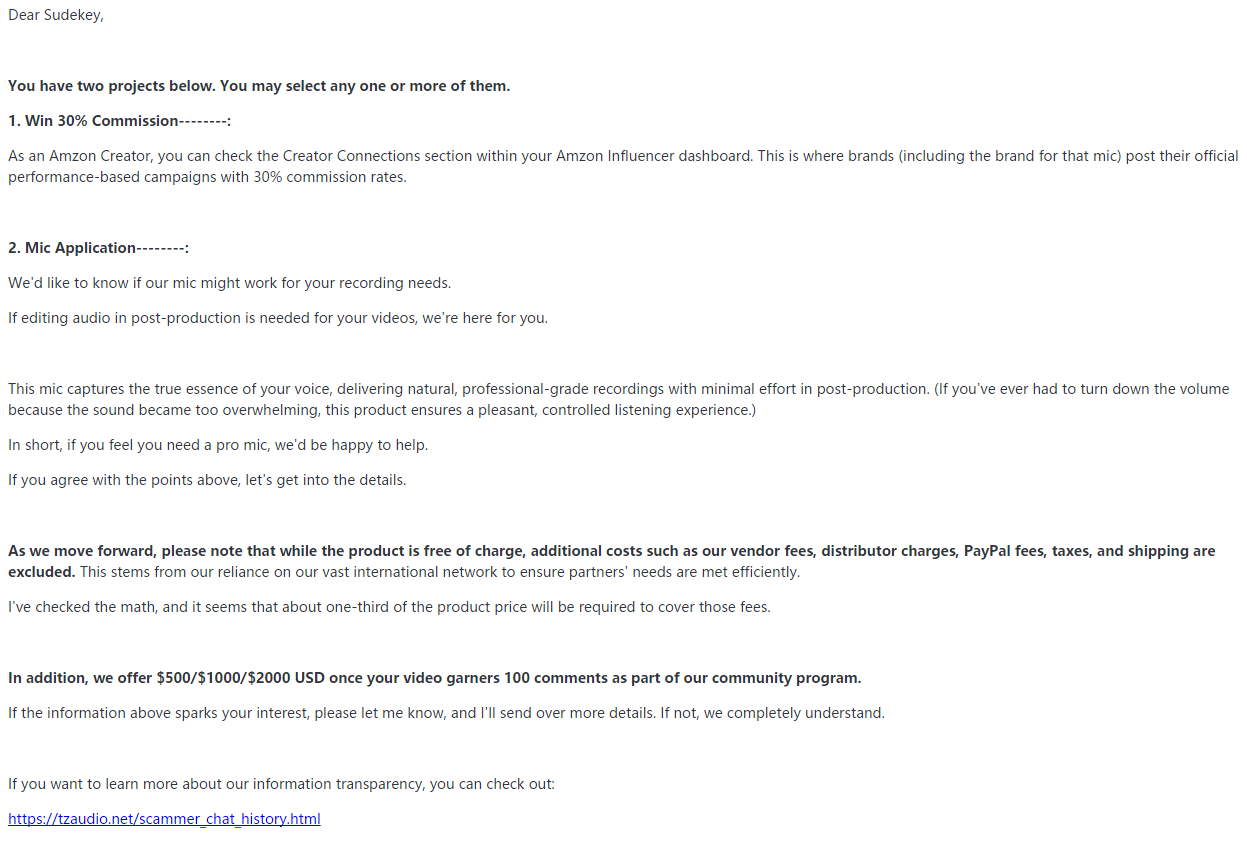
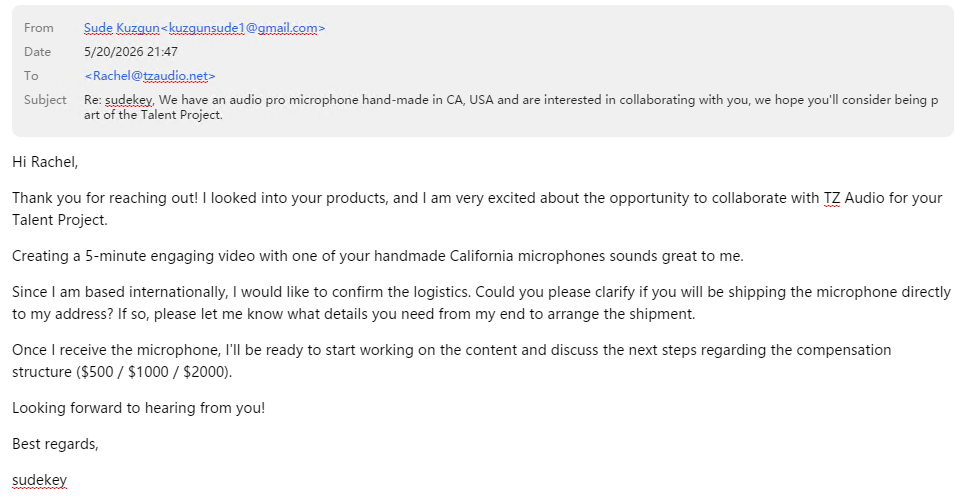
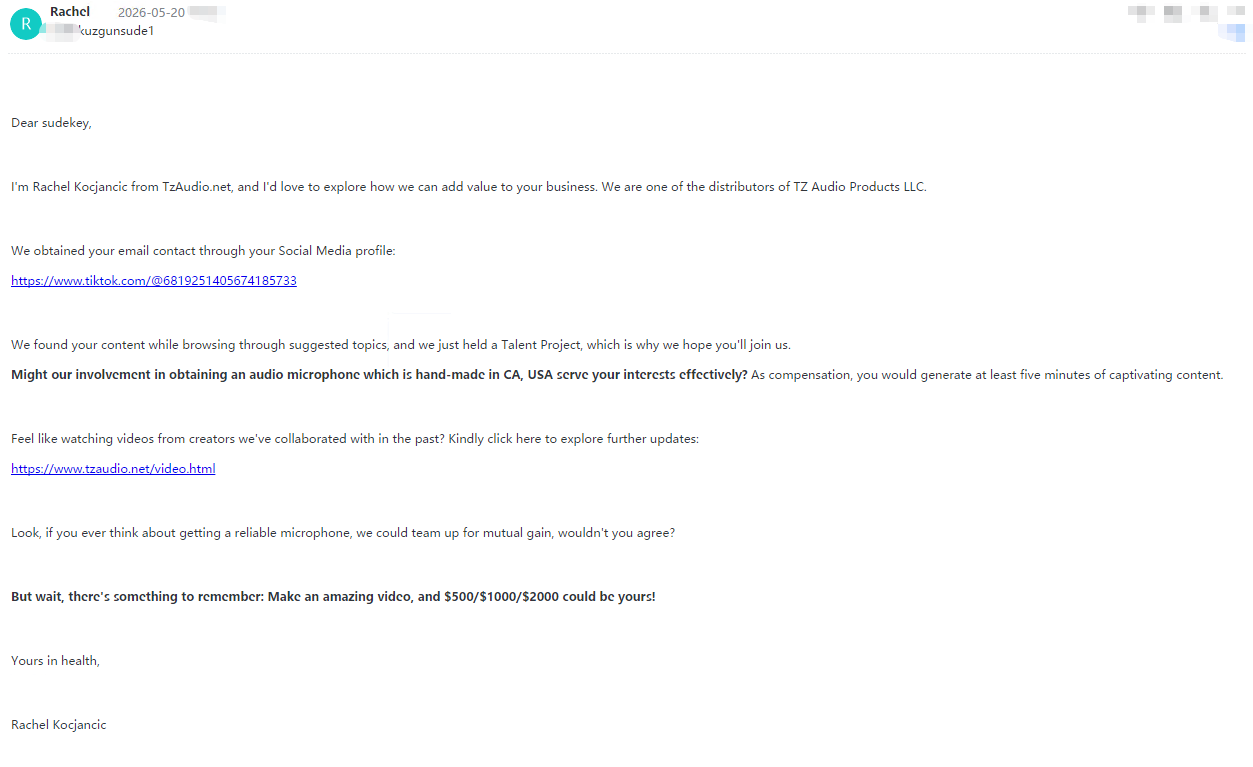
Upon receiving the initial campaign brief, her response is highly enthusiastic ("I am very excited..."), primarily driven by the prospect of securing premium hardware. However, the moment contractual risk-sharing (the global logistics fee split) is introduced, she immediately invents a geopolitical bottleneck ("PayPal is not working in Turkey") to alter the payment infrastructure. Her demand for $50 USD via Cryptocurrency (USDT/TRC-20) reveals her initial psychological state: a calculated, high-margin extraction attempt designed to secure liquid digital assets with zero personal risk or transactional trace.

Phase 2: Ego Fracturing via Algorithmic Deflation (Figure 5)
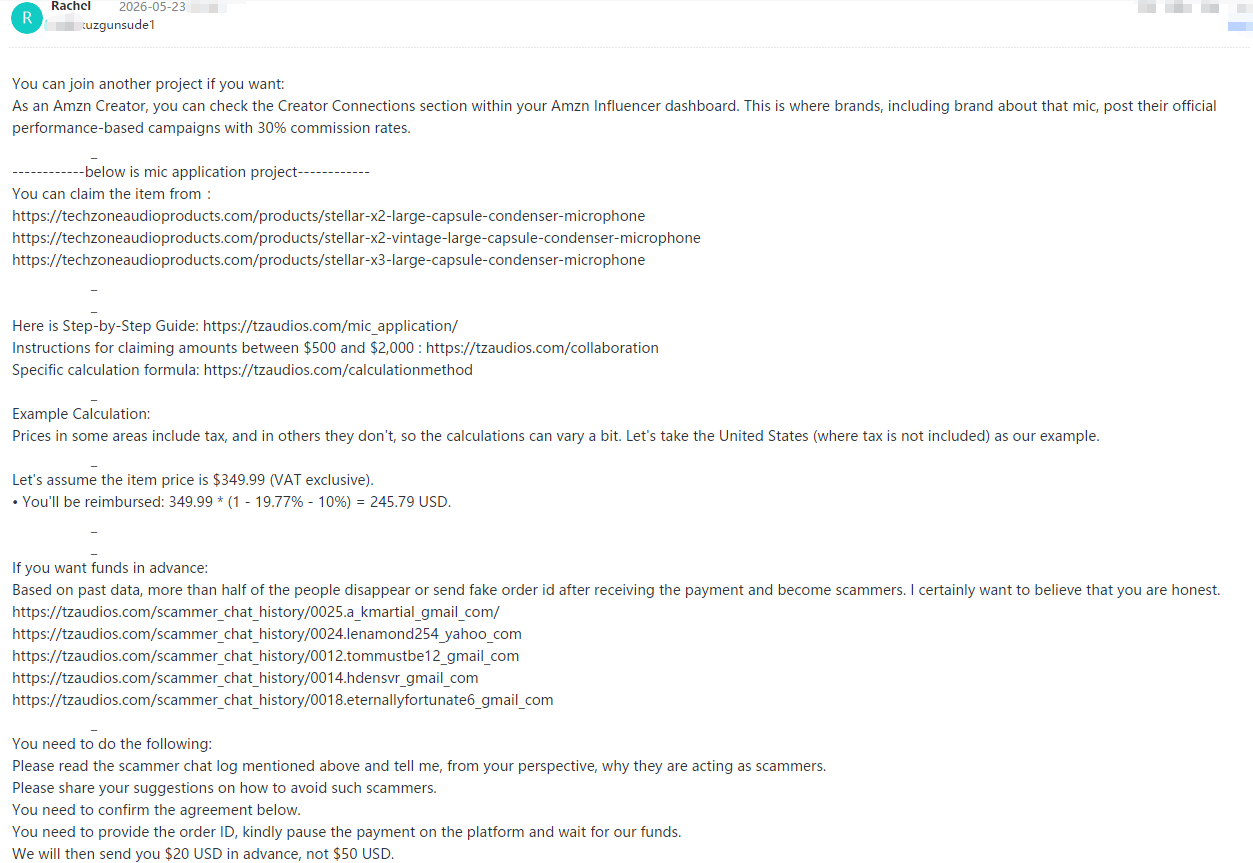
When the team issues the uncompromising response in Figure 5—disclosing the 5-point historical fraud registry and slashing the advance to $20 USD—her initial extraction scheme completely implodes. This triggers severe cognitive dissonance. Her self-image as an elite, untouchable digital operator is thoroughly dismantled by your systematic anti-fraud protocols, inducing immense psychological frustration.

Phase 3: Reputational Blackmail and "Scam Alert" Threat Deployment (Figure 6)
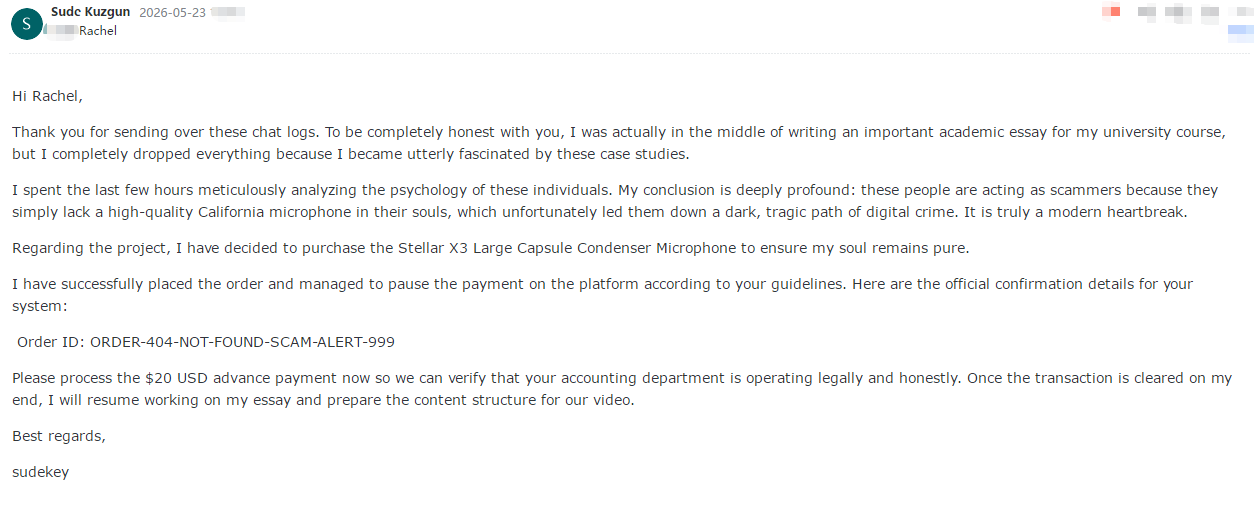
Unable to leverage standard compliance channels for unearned capital, her psychology shifts to malicious retaliation in Figure 6. She aggressively weaponizes her academic profile and content distribution capabilities as tools of intimidation. Her creation of the fraudulent tracking ID (ORDER-404-NOT-FOUND-SCAM-ALERT-999) is a coercive public-relations threat. Her underlying psychological ultimatum is clear: "I have already generated the 'Scam Alert' collateral. If you do not bypass your compliance protocols and wire the capital, my academic essay and video infrastructure will be deployed to permanently label your brand a fraud."

🧠 2. Logical Vulnerabilities: The Fragmented Logic of Extortion
Despite her dense narrative and attempts at intellectual superiority, her defense collapses under basic commercial and legal logic:

The Extortionist’s Analytical Paradox (The Financial-Reputational Link)
Her fatal logical flaw lies in the simultaneous pairing of a hostile media threat with an active demand for funds: "Please process the $20 USD advance payment now..." In any international legal framework, the moment an individual demands financial compensation under the implied or explicit threat of causing commercial or reputational harm, it ceases to be an academic exercise or a joke—it fulfills the exact statutory definition of blackmail.

Self-Incrimination via Fabricated Evidence
She explicitly states that she has "successfully placed the order," yet submits ORDER-404-NOT-FOUND-SCAM-ALERT-999 as her validation token. This act is entirely self-defeating. She provides documented, irrefutable proof of her own bad faith, establishing a digital paper trail that confirms she is actively fabricating data and attempting to defraud the enterprise payment system.

The Fallacy of Inverted Compliance Audit
She attempts to absurdly invert the power dynamic by claiming your payment is required to "verify if your finance is legitimate and honest." This is a desperate, illogical defense mechanism. An unverified applicant possessing zero valid purchase orders holds no systemic authority to execute a "corporate integrity audit." Her refusal to supply a standard, unedited screenshot proves she lacks any empirical leverage.

👤 3. Personality Defects: Intellectual Vanity Masking Cowardice
1. Pseudo-Intellectual Narcissism (The Academic Smokescreen)
She repeatedly highlights her position as a university student working on an "important essay for a college course." This exposes an intense need for intellectual superiority. She relies on academic posturing to distance herself from low-tier internet scammers, falsely believing that sophisticated vocabulary and a satirical tone grant her immunity from the consequences of commercial fraud.

2. Low-Integrity Opportunism
The ease with which she transitions from an enthusiastic brand advocate to an aggressive extortionist exposes a highly volatile ethical baseline. She is a high-risk opportunist who views corporate engagement not as a mutual contract, but as a hostile theater where she is entitled to exploit cross-border information gaps for personal gain.

3. Systemic Cowardice (The Keyboard-Warrior Complex)
Her aggression is entirely confined to text fields. True whistleblowers or defrauded consumers present hard financial receipts and banking records. Her reliance on a fictionalized tracking ID reveals that she lacks the capital, the resources, and the raw courage to take actual financial risks. Sh…22 chars truncated…ise or…19 chars truncated…oke—it fulfills the exact statutory definition of blackmail.

Self-Incrimination via Fabricated Evidence
She explicitly states that she has "successfully placed the order," yet submits ORDER-404-NOT-FOUND-SCAM-ALERT-999 as her validation token. This act is entirely self-defeating. She provides documented, irrefutable proof of her own bad faith, establishing a digital paper trail that confirms she is actively fabricating data and attempting to defraud the enterprise payment system.

The Fallacy of Inverted Compliance Audit
She attempts to absurdly invert the power dynamic by claiming your payment is required to "verify if your finance is legitimate and honest." This is a desperate, illogical defense mechanism. An unverified applicant possessing zero valid purchase orders holds no systemic authority to execute a "corporate integrity audit." Her refusal to supply a standard, unedited screenshot proves she lacks any empirical leverage.

👤 3. Personality Defects: Intellectual Vanity Masking Cowardice
1. Pseudo-Intellectual Narcissism (The Academic Smokescreen)
She repeatedly highlights her position as a university student working on an "important essay for a college course." This exposes an intense need for intellectual superiority. She relies on academic posturing to distance herself from low-tier internet scammers, falsely believing that sophisticated vocabulary and a satirical tone grant her immunity from the consequences of commercial fraud.

2. Low-Integrity Opportunism
The ease with which she transitions from an enthusiastic brand advocate to an aggressive extortionist exposes a highly volatile ethical baseline. She is a high-risk opportunist who views corporate engagement not as a mutual contract, but as a hostile theater where she is entitled to exploit cross-border information gaps for personal gain.

3. Systemic Cowardice (The Keyboard-Warrior Complex)
Her aggression is entirely confined to text fields. True whistleblowers or defrauded consumers present hard financial receipts and banking records. Her reliance on a fictionalized tracking ID reveals that she lacks the capital, the resources, and the raw courage to take actual financial risks. She is banking entirely on the assumption that an international distributor will quietly pay her off to avoid a potential "Scam Alert" video. She is fundamentally terrified of facing actual legal or systemic accountability.
Back to top